Being cashless doesn’t make you bankrupt, does it?

With many advantages and rewards, credit cards, MFS can be a financially sound decision for all of your purchases - but don’t totally rule out debit cards, and cash just yet. Though the world is pushing us to cashless transactions, should we?
Does the payment method matter?
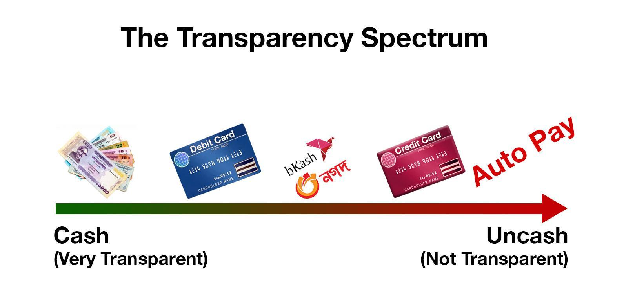
Yes, it matters. The consumption rate of a product or service has a direct relation to how you pay for that product or service. The biggest effect of changing away from cash is the fact that metering, in a mental accounting sense, becomes difficult.
When you pay by cash, you take out your wallet, count the bills and keep the change. You have a very good idea of how much you’ve paid as the process is very salient. When you pay by Apple Pay or a credit or debit card, it happens all so quickly that you don’t see the numbers, don’t rehearse them, and don’t get enough time to think wisely. You lose the memory of how much you’ve paid.
What makes this metering hard?
- People who have made payments by cash, those payments are much more memorable, and people are much more accurate recalling how much they had spent by cash.
- From a mental accounting sense, categorization becomes fuzzy. For instance, it is difficult to budget for different things.
- This is a problem unique to credit cards– people tend to use cues in the environment to make judgments about their wealth in a completely irrational way. In particular, People tend to use the credit limit as a signal of how prosperous they are.
When you combine these three factors, several things happen. People who tend to use electronic, mobile, or low-transparency methods of payment tend to be more impulsive. They tend to lose memory for their payments, and they tend to spend faster than the people who use cash. If you want to control how much you spend, cash is still the king.
When should you use electronic transaction/payment?
Theory of Decision point says, People usually decide before every action. For instance, If you give the same amount of popcorn divided into 4 small pieces, the consumption rate will be lower as they have to make several decisions like opening the pack or eating or not. As a result, mostly they will avoid opening a new pack again and eat. So, a small obstacle can reduce the consumption rate.
Last year I opened a deposit scheme at a government bank and I was supposed to deposit a certain amount within the 15th of a month. But lastly, I failed to deposit within the deadline for three consecutive months. There were several obstacles behind this failure:
- I was too lazy or overloaded to prioritize this deposit task
- It was annoying to go to the bank then maintain a queue & deposit money
- I was negligent thinking that so much money would be deducted from my account
Look, If the bank offers autopay/deposit from my account balance then there will be no obstacle & no scope of losing money from the account. It will automatically deduct before my realization & I’ve nothing to do.
So, if it is necessary or you are aiming to do it there you can use Autopay. Autopay could be by bank account, credit/debit card, MFS, or any payment services.
Bottom line
Credit cards are not for everyone. It really does depend on your personality, the way that you manage money, your relationship with money, and your ability to resist impulse buys. With cash, you may spend less than you would swipe a card or tap to MFS app because it’s more tangible, and you can actually see the money go away.